
News
12.08.2025
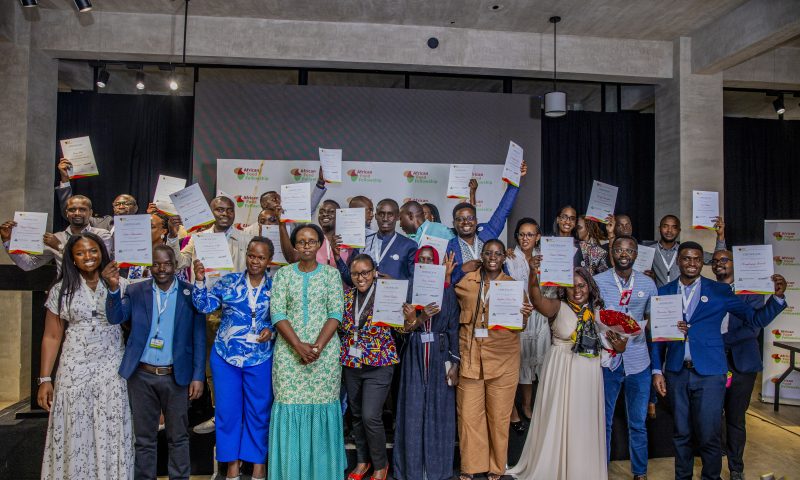
Rwanda Cohort 4 Fellows graduate from leadership programme

A group of 27 food systems professionals on August 8 2025 graduated from the Food Systems Fellowship Programme run by the African Food Fellowship. They joined a vibrant network of over 100 Fellows in the country working together to create healthy, inclusive and sustainable food systems.
The fourth cohort is made of brilliant and passionate food systems leaders working in the impact areas of sustainable land use, access to nutrititous foods, and food technology and trade. As part of the graduation ceremony, they showcased their ongoing food systems actions, which are initiatives they are collaborating on to shift the policies, power dynamics, investments and incentives that shape food systems. Among these initiatives included emerging work in one on climate-resilient conservation agriculture, post harvest losses reduction in vegetables, building an efficient, farmer-centered seed system, and helping to fix quality and safety gaps in the meat value chain.

“My time at the African Food Fellowship has been rich and fulfilling. I had fellows that I could always count on, who shared information with me about the food systems and we learned a lot about how a food systems leader has to have a broader view of the whole spectrum. I was also able to develop an understanding of how complex the food system is, and to have foresight, engaging different approaches to problem solving, adaptability and understanding that your contribution matters” said Ritha Tumukunde, one of the graduating Fellows.
The Food Systems Leadership Programme is a 10-month course offered by faculty from Wageningen University of Research and Wasafiri Consulting. It equips Fellows with the knowledge and skills to develop their capacity as good leaders who can create bridges across sectors, make good decisions, and work collaboratively to address the most salient issues facing food systems in Africa today.
For Fils Uwitonze, who works as an M&E lead at Carnegie Mellon University, the Fellowship has broadened his previously pigeonholed view of the food system.
“Throughout the fellowship I engaged with passionate food systems players, and that empowered me. My thinking was changed from project level to a system level, and this has expanded my thinking, I now see things more clearer, ” said Uwitonze.
“I want to continue innovating and improving in my food systems interventions” he added.

Reflecting on the past 4 cohorts, Ishimwe Anysie, the African Food Fellowship Rwanda Lead said “In many ways the past four years have confirmed our theories on how leadership can transform food systems.”
“People are hungry for collaboration, many fellows throughout all the cohorts have talked of being tired of working in silos. The fellowship has enabled these food systems leaders to go from just learning to collaborating into action,” she added.
The chief guest, Chantal Ingabire, Director General in charge of planning at the Ministry of Agriculture, said food systems is a new concept not only in Rwanda but in Africa as a whole, so initiatives like the African Food Fellowship, which equip leaders with understanding and experience, are invaluable.

“This Fellowship is an opportunity to help build capacity, gather ideas, getting more creative and innovative ideas to support our agricultural transformation journey,” said Ingabire, noting that agriculture is more critical now more than ever. It is one of the most urgent and consequential sectors of our times,” she said.
Dr Ingabire pointed out that as government grapples with challenges such as Post harvest losses and limited access to nutritious foods, collaboration has never been more important.
“Transformation of Food systems is not only the work of government but other partners as well. We target to reduce post-harvest losses to go below 5% by 2030, ” she said.
