
Blog
05.10.2026
Odile Mukeshimana is building sustainable cold chains that leave no one behind

Odile Mukeshimana came to the African Food Fellowship as an educator, field coordinator, and SDG 2 Champion. She gained something harder to teach: the ability to see the whole system, and the confidence to act within it.
For years, Odile Mukeshimana worked where knowledge meets practice. As a lecturer and Head of Department, she taught food processing, post-harvest management, and digital innovation in agribusiness. In the field, she worked directly with farmers, value chain actors, and institutions, helping make technical knowledge useful to the people who needed it most.
But meaningful work and lasting change are not always the same thing.
Joining the African Food Fellowship changed how she saw her role. What had been a career built on technical delivery and knowledge sharing began to grow into something more: facilitating conversation, building connections across sectors, and finding the places where real change becomes possible.
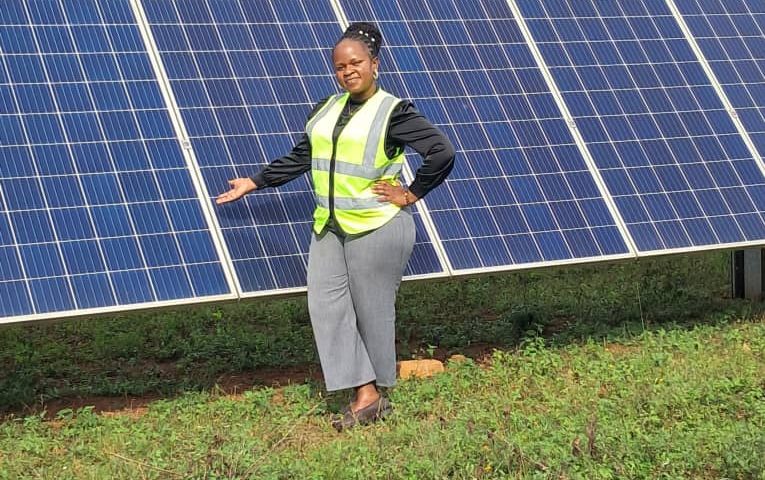
Today, Odile works at the Africa Centre of Excellence for Sustainable Cooling and Cold Chain (ACES), a space that sits at a critical intersection of climate action and food security. Odile helps embed gender equality and social inclusion into programmes that span refrigeration, energy, health, and food systems, ensuring that these climate-relevant solutions scale and work for everyone, not just the well-connected.
She is also among the top 50 African women selected for the AWARD Gender Responsive Agrifood Systems Policy Fellowship.
Here is Odile’s story.

Your background spans teaching, field coordination, and advocacy. How has your leadership evolved since joining the Fellowship?
My journey in food systems has been shaped by a strong foundation from farm to fork. I have taught food processing, post-harvest management, and digital innovation, while also working directly with farmers, value chain actors, and institutions in the field. During this period, I was honoured to contribute as an SDG 2 Champion, advocating for zero hunger and sustainable agriculture.
Joining the African Food Fellowship marked a turning point. It helped me see the food system as something interconnected, not a collection of separate parts. I began to understand that outcomes depend not only on technical solutions, but also on relationships, incentives, and how institutions work together.
This changed how I lead. I moved from delivering knowledge to facilitating dialogue. I shifted from focusing on individual actors to connecting people across the system. I started asking not just what the problem is, but where the real opportunities for change lie.

Your work at ACES puts you at the crossroads of sustainable cooling, food systems, and social inclusion. These are often treated as separate concerns, but you are working to bring them together. What other changes are you most proud of contributing to since joining the Fellowship?
One shift I have contributed to is a change in mindset. Inclusion is increasingly understood not as a separate social topic, but as something that makes technical programmes work better. Through training and engagement, more participants are now thinking about access, participation, and equity as part of how they design solutions and not as an afterthought.
I have also contributed to fieldwork on post-harvest losses and cooling needs, and worked to connect farmers, aggregators, and institutions who do not always talk to each other.
Editor’s note: These contributions are gradual. But they sit within a bigger picture: cold chains and sustainable cooling are also climate interventions. Reducing food loss through better cooling cuts emissions, and doing it with solar and energy-efficient technology cuts them further. But none of that delivers its full potential if the farmers and small-scale processors who need it most cannot access or afford it. That is the gap Odile is working in.

In what ways has the African Food Fellowship shaped your journey?
The Fellowship played a transformative role in my development as a leader. It helped me understand how different parts of the food system connect and how power, incentives, and institutions shape what is possible.
It also changed how I see myself. I moved from being primarily a technical expert to someone who facilitates and connects. I became more focused on finding opportunities for change rather than only delivering solutions.
This shift had real results. After completing the Fellowship, I was selected among the top 50 African women for the AWARD Gender Responsive Agrifood Systems Policy Fellowship. The Fellowship also gave me the tools to work effectively in complex, cross-disciplinary environments like ACES. And it instilled a habit of continuous learning that continues to shape everything I do.

The climate case for sustainable cold chains is well established. The equity case is catching up. Your vision sits at the point where the two converge. Looking ahead, what does the change you want to see look like?
I want to contribute to food systems that are efficient, inclusive, and grounded in real-world needs. I want to see cold chains and sustainable cooling designed with inclusion built in from the start. I want to see farmers, processors, and institutions genuinely connected and able to participate. And I want to keep building the capacity of professionals to apply these ideas in practice.
The gap between a well-designed cold chain and a food system that works for everyone is a design problem. I intend to keep working on it.
